
Kyiv-Mohyla Faculty of Law at CIVICA Seminar in Paris

Inclusivity in higher education is becoming an essential part of the mission of modern universities. These principles shaped the core of the CIVICA 2025 Inclusivity Seminar.
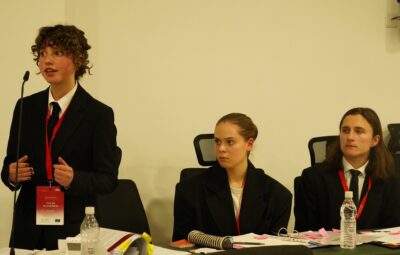
On 20–21 November 2025, Sciences Po (Paris, France) hosted the CIVICA 2025 Inclusivity Seminar, organized within the framework of the project “CIVICA – The European University of Social Sciences” (2022–2026). The event focused on institutional approaches to ensuring broader participation of students and researchers from vulnerable groups, as well as on developing shared strategies for support across the CIVICA university network.
The seminar gathered representatives from universities in France, Spain, Italy, Sweden, Romania, the United Kingdom, and Ukraine. The National University of Kyiv-Mohyla Academy was represented by Tetiana Fedosieieva, Vice Dean of the Faculty of Law, who took part in the working discussions and thematic sessions.
The programme covered a wide range of issues related to the organisation, support, and integration of students and researchers with refugee status in European universities. Among the topics that received particular attention:
– Mechanisms for selecting and including students and researchers seeking asylum or holding temporary protection status: approaches to assessing academic potential, designing individual learning paths, and creating conditions for continuity in education and research.
– Models of campus support: practices from Sciences Po and other French institutions aimed at adaptation, academic advising, mentoring, psychological support, and access to social services.
– Successful cases of specialised programmes: examples of comprehensive initiatives combining academic learning, integration activities, language instruction, cultural orientation, and community-building.
– The role of partnerships and inter-university cooperation: establishing shared standards for supporting refugees, exchanging data and expertise, engaging civil society organisations, and involving international donors.
– Long-term integration tools: opportunities for continued education, participation in academic programmes, inclusive research projects, and development of employability skills.
The discussions highlighted a strong interest among European universities in strengthening their inclusivity policies and the need for coordinated approaches to supporting those who have been forced to leave their countries. Comparing practices across national systems made it possible to identify effective models that may be adapted and scaled within the CIVICA network.
Participants emphasised that such meetings are crucial for enhancing institutional capacity in supporting refugees and for shaping a coherent European policy of inclusivity in higher education. The outcomes of the seminar will inform further development of CIVICA initiatives and deepen cooperation among partner universities.