Faculty Members Present Research on the Genocidal Policies of the Russian and Soviet Empires at the International ASEEES Convention in Chicago
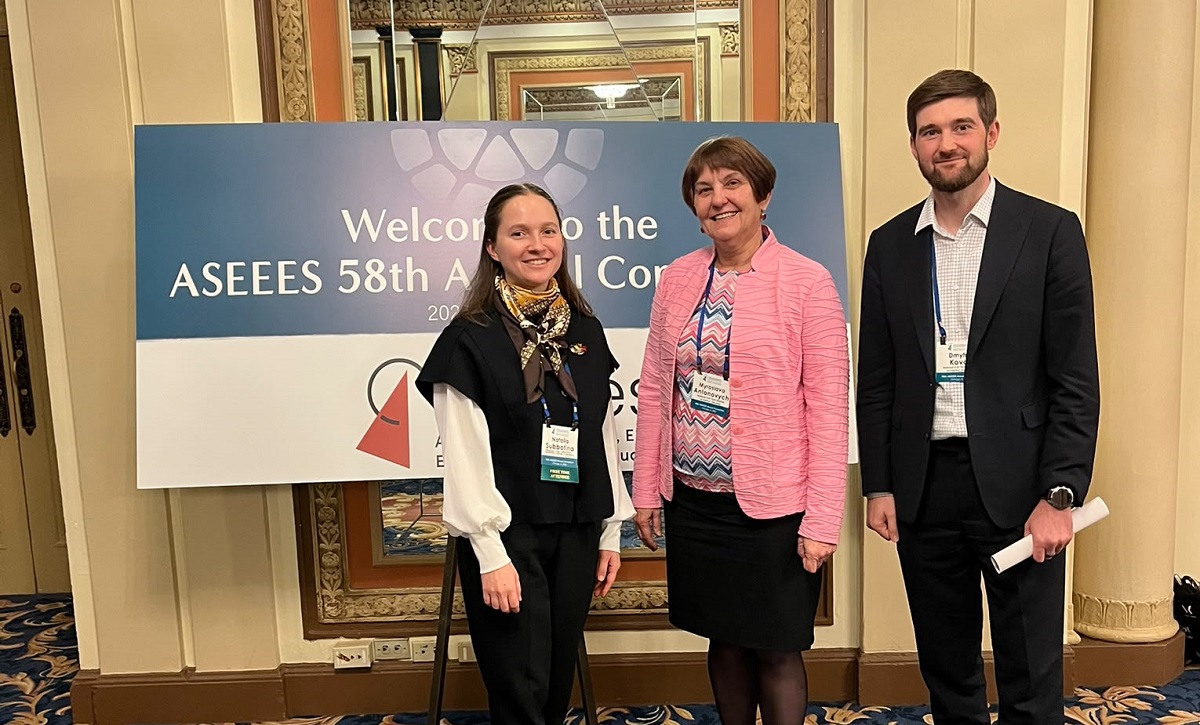
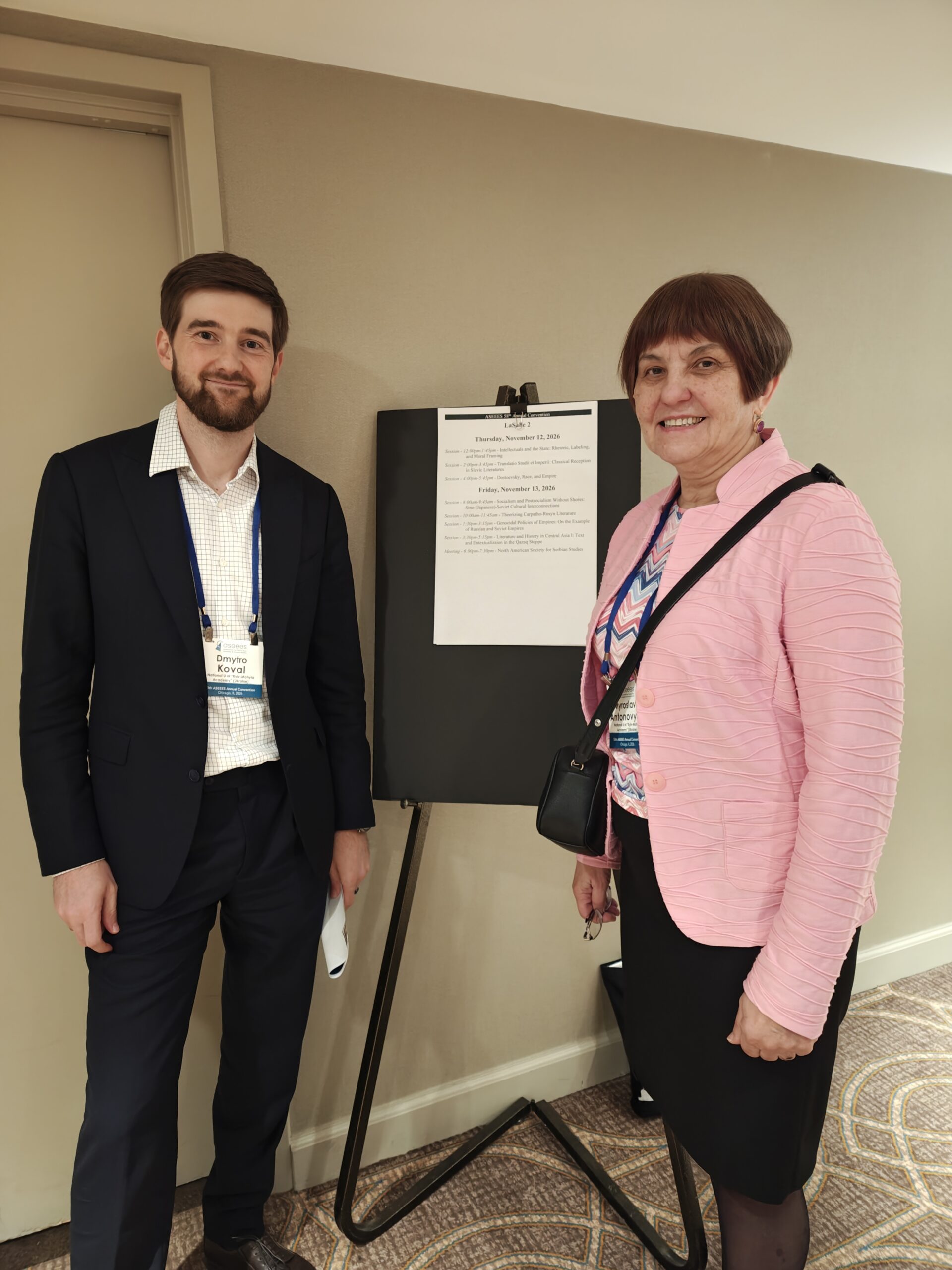
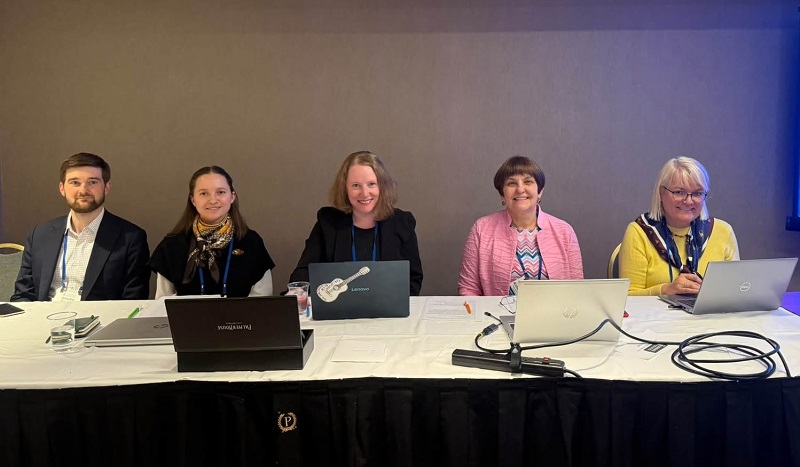
On 13 November 2026, a panel discussion entitled “Genocidal Policies of Empires: On the Example of Russian and Soviet Empires” took place in Chicago, USA, as part of the 58th Annual Convention of the Association for Slavic, East European, and Eurasian Studies (ASEEES). The discussion featured representatives of the Faculty of Law at the National University of Kyiv-Mohyla Academy — Myroslava Antonovych and Dmytro Koval.
The panel focused on genocide as an instrument of imperial domination. Participants examined historical and contemporary manifestations of genocidal policies, including the Holodomor of 1932–1933, the deportation of the Crimean Tatars in 1944, memory politics in Lithuania, and crimes committed by Russia during its war against Ukraine.
The Holodomor as an Instrument of Building the Soviet Empire
Myroslava Antonovych presented a paper entitled “The Holodomor as a Crime of Genocide in the Context of Constructing the Soviet Empire”.
In her presentation, she argued that the Holodomor was not only a crime against the Ukrainian people but also one of the key instruments in the establishment and consolidation of the Soviet Empire.
Drawing on the works of Raphael Lemkin, who coined the term “genocide”, and contemporary research on colonialism, Myroslava Antonovych examined genocide as a means of colonial subjugation. She emphasised that Soviet policies targeting Ukrainians involved not only the deliberate creation of famine but also the systematic destruction of the national intelligentsia, persecution of Ukrainian churches, suppression of cultural identity, and changes to the demographic composition of the population.
Particular attention was devoted to the challenge of proving the specific intent to commit genocide. The speaker referred to the jurisprudence of international criminal courts and tribunals, which allows such intent to be inferred from the totality of facts and circumstances, even in the absence of a document containing a direct order to destroy a particular group.
An important conclusion of the presentation was the need to examine Russia’s ongoing aggression against Ukraine within a broader historical context. According to the researcher, there is historical continuity between the imperial practices of the Russian Empire, Soviet policies towards Ukrainians, and Russia’s contemporary actions. Studying this continuity is essential for understanding the crimes being committed today.
Historical Context in Strategies for Prosecuting Genocide
Dmytro Koval, Head of the Department of International and European Law at Kyiv-Mohyla Academy, presented a paper entitled “Historic Contextualization of the Legal Strategy for Prosecuting Genocide in the Russia-Ukraine War”.
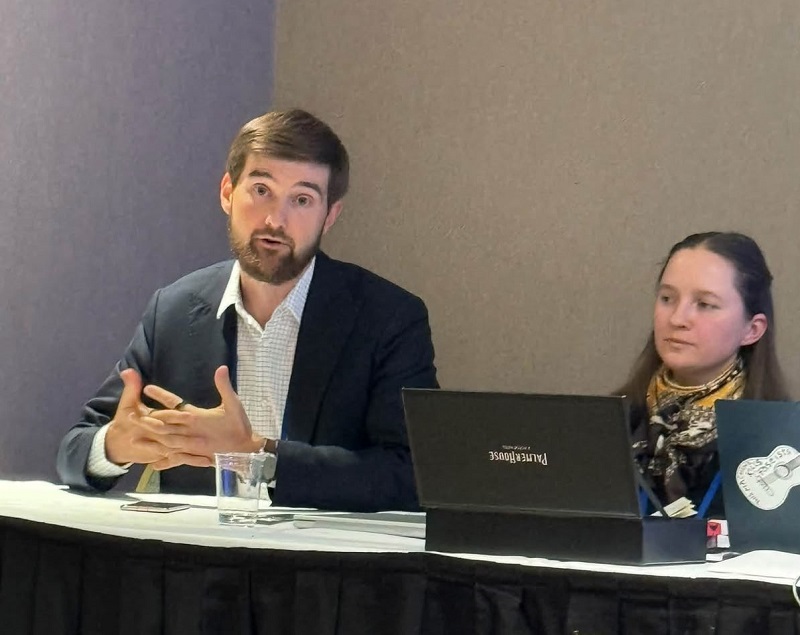
The presentation addressed a question that remains insufficiently explored in international criminal law: what role should historical context play in developing legal strategies for investigating and prosecuting the crime of genocide?
Despite the evident importance of historical context for understanding genocides, international courts have not always given it sufficient attention. Dmytro Koval analysed the jurisprudence of the International Criminal Tribunal for Rwanda, the International Criminal Tribunal for the former Yugoslavia, and the Extraordinary Chambers in the Courts of Cambodia, as well as relevant academic research.
The speaker paid particular attention to the different functions of historical analysis in criminal proceedings. Historical materials can help judges understand the circumstances leading to crimes, explain the origins of discriminatory policies, reveal the significance of dehumanising rhetoric, and establish connections between individual episodes of violence.
At the same time, the central argument of the presentation was that historical analysis should not merely support an already established legal position but should also influence the process of developing prosecution strategies for genocide.
In the context of the Russia-Ukraine war, this approach makes it possible to examine the historical evolution of Russian policies towards Ukrainian national identity, establish connections between different forms of violence, and assess their potential role in implementing a broader criminal plan.
In particular, historical context may be important for analysing killings, torture, the forcible transfer of Ukrainian children, attacks on infrastructure, and the destruction of cultural heritage. At the same time, it is necessary to distinguish between acts that directly constitute genocide under international law and other manifestations of policies aimed at destroying Ukrainian identity, which may have evidentiary significance in establishing genocidal intent.
Dmytro Koval also highlighted the risks associated with the use of historical materials in judicial proceedings, including the possibility of conflicting historical interpretations and the influence of judicial outcomes on public perceptions of historical events.
An Interdisciplinary Perspective on Imperial Policies
The participation of representatives of the Faculty of Law at Kyiv-Mohyla Academy in the international ASEEES convention provided an opportunity to present Ukrainian legal scholarship within a broader interdisciplinary discussion on imperialism, colonialism, and mass violence.
Both presentations demonstrated the importance of combining historical research with international legal analysis — both for reassessing crimes of the past and for developing effective legal approaches to ensuring accountability for crimes being committed against Ukraine today.