
How are digital technologies transforming the ways conflicts are resolved?
And what role can artificial intelligence play in this process — merely a tool for better information analysis, or something more?
These questions are increasingly discussed by professionals in the field of alternative dispute resolution (ADR) across different countries. As technology evolves, it is not only the tools that change, but also approaches to conflict management, communication, and trust-building.
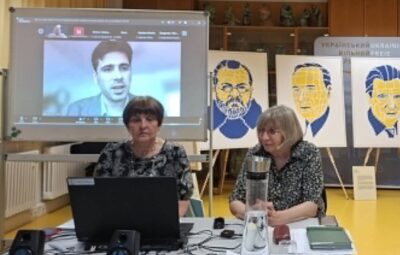
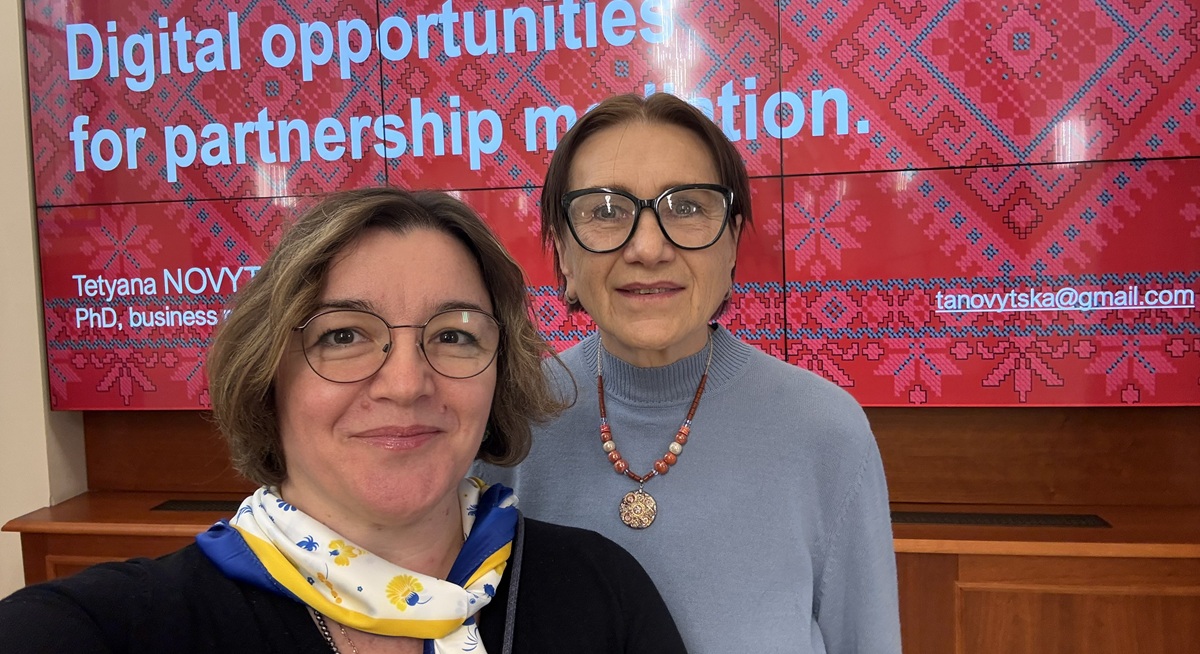
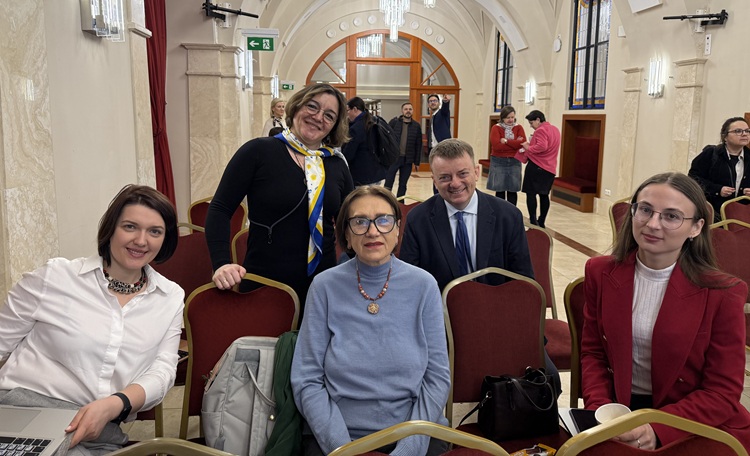
Diana Protsenko, Senior Lecturer at the Department of Private Law, and Tetiana Novytska, Senior Lecturer at the Andriy Meleshevych Kyiv-Mohyla School of Governance, took part in the summit “ADR in the Digital Era: Tools, Trust and Transformation,” hosted by Corvinus University of Budapest.
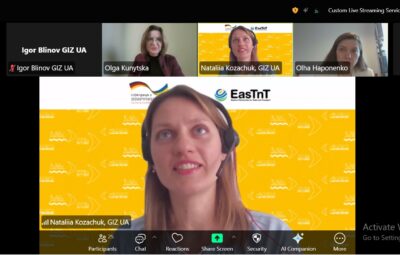
The final summit of the DIGARD V4U project brought together ADR professionals, researchers, and digital innovators to discuss how digital tools are transforming the field of alternative dispute resolution.
Key topics of discussion included:
- which digital innovations are already used by ADR professionals;
- which technologies are still lacking;
- how to strengthen digital literacy and digital competencies;
- how and when technologies can be integrated into dispute resolution processes;
- the role of artificial intelligence in these processes, as well as the risks and challenges it creates.
The summit resulted from close cooperation among colleagues from the Visegrad Four countries — Poland, Czech Republic, Slovakia, and Hungary. Representatives of universities, research institutions, and civil society organizations from these countries, together with the Ukrainian partner SET University, collaborated on a project supporting Ukrainian ADR professionals through the application of IT tools.
The final event had an intimate yet thoughtful and sincere atmosphere. During the two days of the summit — as well as throughout more than a year of collaboration — Ukraine remained at the center of attention.
Diana Protsenko noted that she was particularly impressed by the partners’ commitment to supporting a country paying an extremely high price for its choice of future, creating a strong sense of international solidarity.
During the summit, Diana Protsenko presented a report titled “The Impact of Technology on Conflict Management Systems (DSD, ICMS)”, focusing on the need for a systemic approach to conflicts in environments such as teams, communities, or organizations, where conflict energy can be redirected toward necessary systemic change.
Participation in the summit provided an opportunity to exchange experiences with the international ADR community and discuss how digital technologies can support modern conflict management systems.